
Introduction: The Evolution of Gaming
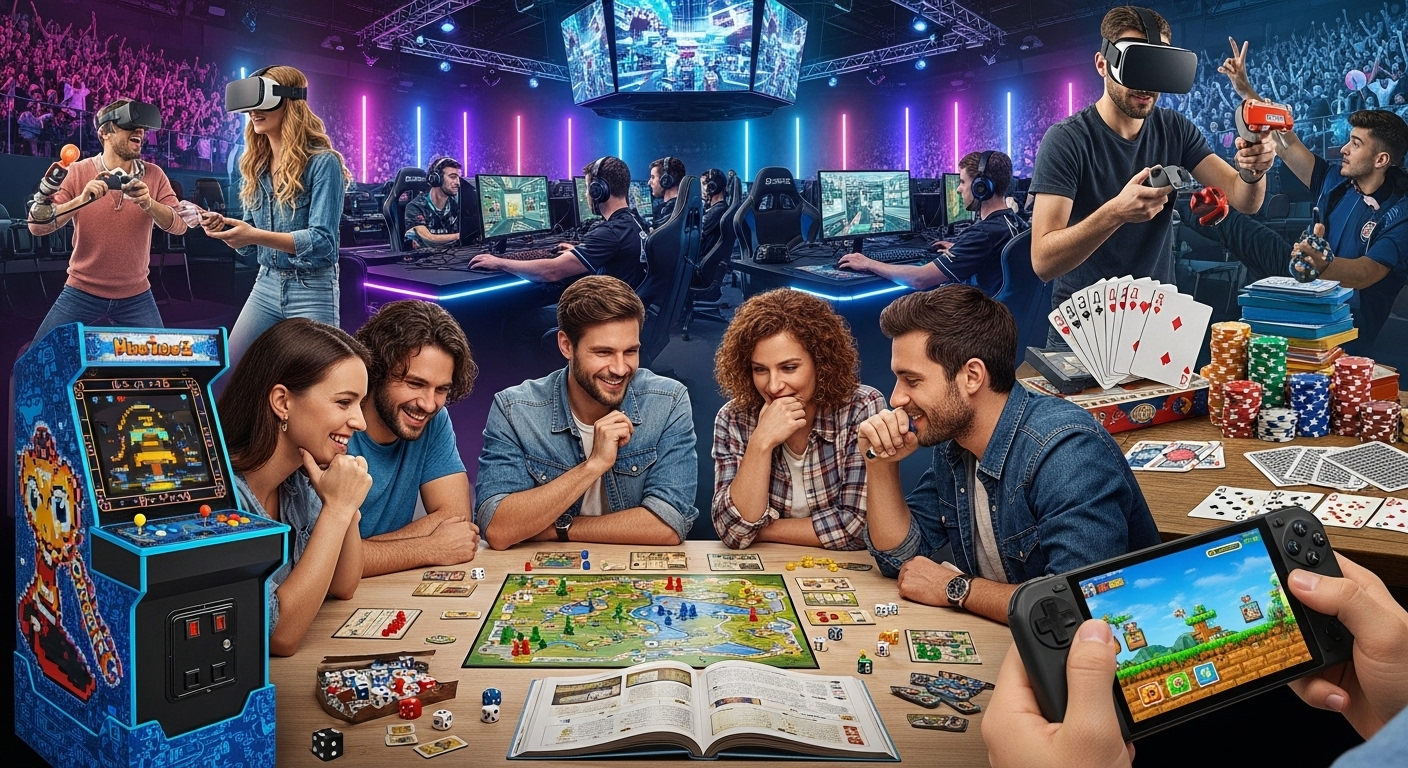
Video games have come a long way from their early days as simple pixelated pastimes to becoming a global cultural phenomenon. In just a few decades, the gaming industry has transformed into one of the most significant forms of entertainment in the world. Today, video games are more than just games—they are interactive experiences that engage, entertain, and connect people across the globe. In this post, we will explore how video games have evolved, how they impact our lives, and what makes them such a powerful medium for entertainment and expression.
The Early Days: A New Form of Entertainment
The history of video games dates back to the early 1970s, when developers like Atari created the first arcade machines. Games like Pong and Space Invaders became instant hits, drawing people into arcades and starting a new era of interactive entertainment. These early games were simple in design, with basic graphics and mechanics, yet they were groundbreaking in their ability to engage players in a way no other form of entertainment could at the time.
In the 1980s, video games began to make their way into homes with the advent of gaming consoles such as the Atari 2600 and the Nintendo Entertainment System (NES). Games like Super Mario Bros., Pac-Man, and Donkey Kong became iconic, shaping the future of gaming and laying the groundwork for the industry’s rapid growth in the years to come. At this time, gaming was primarily a solitary experience or something shared among friends and family in the living room.
The Rise of 3D and Open Worlds: Expanding the Boundaries
As technology advanced, so too did the complexity and scale of video games. The 1990s saw the introduction of 3D graphics, which allowed for more immersive, expansive worlds. With the release of consoles like the Sony PlayStation and Nintendo 64, developers were able to create vast 3D environments that gave players more freedom to explore and interact within the game world.
Games like Super Mario 64 and The Legend of Zelda: Ocarina of Time redefined what it meant to play a game. These titles not only introduced 3D graphics but also incorporated more sophisticated gameplay mechanics and stories. Players were no longer just following linear paths—they were engaging with dynamic worlds, solving puzzles, and experiencing narratives that felt more alive and interactive than ever before.
This shift in gaming also marked the rise of open-world design. Games like Grand Theft Auto and The Elder Scrolls V: Skyrim allowed players to roam vast virtual landscapes, making choices that would impact the game world. These open-world experiences blurred the line between game and reality, offering players an unprecedented level of freedom and immersion.
Online Multiplayer: Connecting Players Around the World
One of the most significant developments in gaming came with the rise of online multiplayer. In the early 2000s, the internet allowed gamers to connect with others across the globe, transforming the gaming experience from a solitary activity into a social one. Online multiplayer games like World of Warcraft, Halo 2, and Counter-Strike paved the way for a new era of gaming, where players could join forces or compete with people from all corners of the world.
This shift to online play also helped spark the rise of esports, where professional gamers and teams compete in large-scale tournaments for fame and fortune. The popularity of games like League of Legends and Dota 2 helped establish competitive gaming as a global phenomenon, attracting millions of viewers and creating new career opportunities for gamers.
With the growth of online communities, gaming has become a way for people to connect and form friendships. Whether through cooperative gameplay or competitive matches, online multiplayer has created social spaces where gamers can bond, strategize, and share their love for gaming in a way that was previously unimaginable.
Mobile Gaming: Gaming on the Go
As smartphones became more advanced, mobile gaming emerged as a powerful force in the gaming industry. Games like Angry Birds and Candy Crush Saga brought gaming to millions of people who may never have considered themselves gamers before. The accessibility and portability of mobile games allowed people to play during spare moments, whether on public transport, during lunch breaks, or while relaxing at home.
The popularity of mobile gaming has only grown in recent years, with mobile titles now offering more complex gameplay experiences. Games like Genshin Impact and PUBG Mobile demonstrate that mobile gaming can offer high-quality, immersive experiences comparable to traditional console or PC games. Mobile gaming’s accessibility, combined with the ever-growing power of smartphones, has made gaming available to a broader audience than ever before.
The Indie Game Revolution: Creativity and Innovation
While large game studios have historically dominated the industry, the rise of indie games has brought a fresh wave of creativity and innovation to the gaming world. Thanks to platforms like Steam and itch.io, independent developers now have the tools and resources to create and distribute their games without the need for big budgets or publishers.
Indie games like Undertale, Hollow Knight, and Celeste have gained massive followings due to their unique gameplay, emotional depth, and artistic style. These games often take creative risks that larger studios might avoid, exploring new genres, stories, and mechanics that push the boundaries of what games can be. The success of indie games has proven that creativity, rather than financial resources, is the key to making an impact in the gaming industry.
Indie games have also introduced a more diverse range of stories and experiences to the medium. Games like Celeste and Night in the Woods have explored mental health, identity, and personal growth, proving that games can be a powerful tool for storytelling and self-expression.
The Future of Gaming: Immersive Technologies
As gaming continues to evolve, the future of the industry is exciting and full of possibilities. Virtual reality (VR) and augmented reality (AR) are set to revolutionize the way we play games, offering experiences that blur the lines between the digital and physical worlds.
VR headsets like the Oculus Quest and PlayStation VR allow players to step into entirely new worlds, where they can interact with the game environment in ways that traditional controllers cannot replicate. Games like Half-Life: Alyx and Beat Saber are already showing the potential of VR, providing immersive, first-person experiences that put players at the center of the action.
Meanwhile, AR has the ability to blend real-world environments with digital elements. Games like Pokémon GO have already demonstrated the potential of AR gaming, allowing players to catch virtual creatures in the real world. As AR technology continues to improve, we can expect even more innovative experiences that merge gaming with the physical world around us.
Conclusion: The Endless Potential of Video Games
Video games have grown from humble beginnings into a global industry that shapes not only entertainment but also culture, social interaction, and technology. From early arcade games to the rise of mobile gaming, the evolution of video games has been marked by incredible innovation and creativity. As gaming continues to push the boundaries of what’s possible, we can expect even more immersive, interactive, and meaningful experiences in the future.
Video games are not just a form of entertainment—they are an art form, a social platform, and a means of self-expression. Whether you’re a seasoned gamer or someone just starting to explore the world of gaming, there’s always something new to discover and experience. The potential for gaming is limitless, and as technology continues to evolve, the ways in which we play and engage with video games will continue to surprise and inspire us.