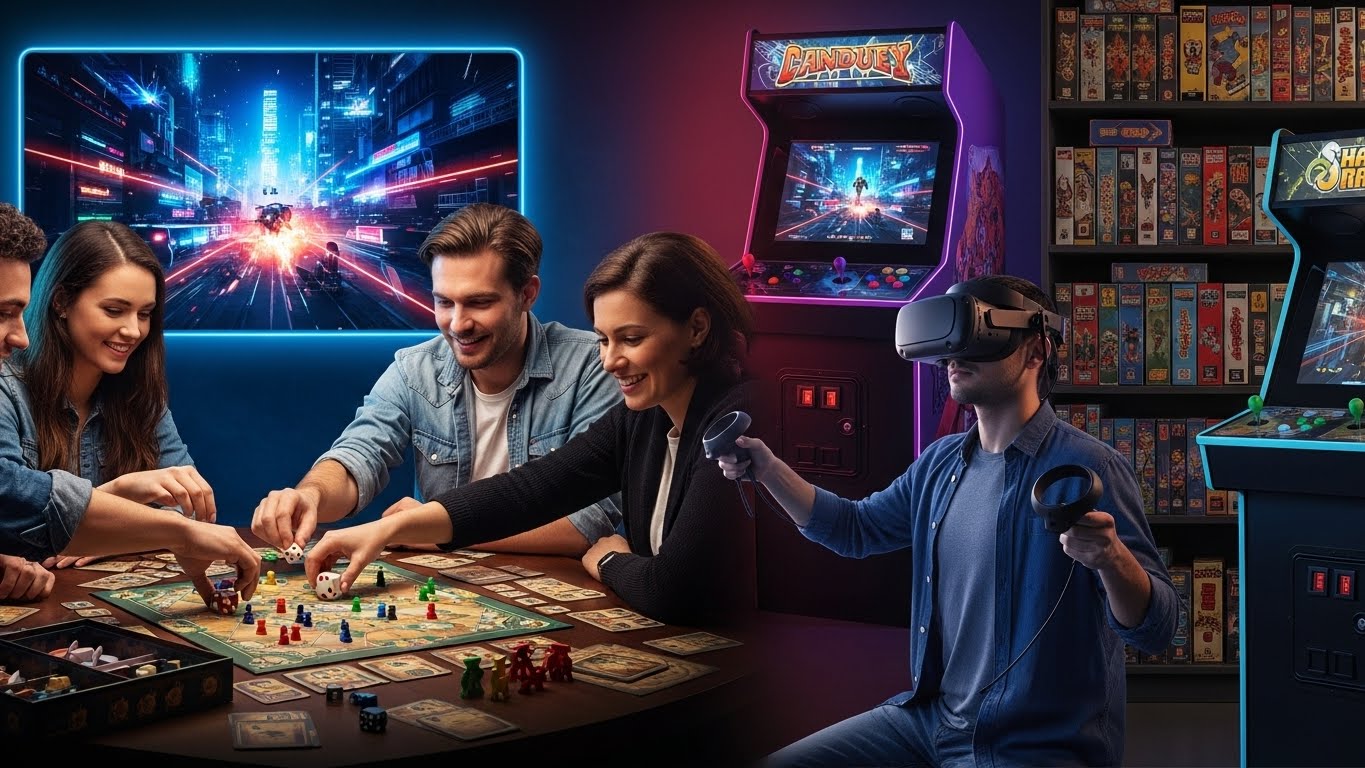

Introduction: The Universal Language of Play
Games have been an integral part of human culture since the beginning of civilization. From ancient board games carved into stone to complex digital worlds powered by artificial intelligence, the essence of gaming remains the same — the joy of challenge, creativity, and connection. In every era, games have mirrored the values, struggles, and dreams of society. Today, they have evolved into one of the most influential forms of entertainment, education, and expression. Whether played on a board, a field, or a screen, games stimulate our imagination and unite people across cultures and generations.
The modern gaming landscape is vast and diverse, encompassing everything from mobile puzzle apps to competitive esports tournaments watched by millions. But beyond fun and excitement, games have a deeper significance — they train our minds, strengthen our problem-solving skills, foster teamwork, and even help us understand ourselves.
The Evolution of Gaming: From Ancient Pastimes to Digital Frontiers
The history of gaming stretches back thousands of years. Ancient civilizations such as Egypt, China, and Mesopotamia had their own forms of games that combined strategy, luck, and social interaction. The Egyptian game of Senet, believed to be one of the oldest in the world, was more than entertainment; it carried spiritual meaning and symbolized the journey to the afterlife. Similarly, the ancient Chinese game of Go remains one of the most intellectually challenging strategy games ever created.
As time progressed, societies continued to create new forms of play. In the Middle Ages, chess emerged as a game of kings and scholars, representing both intellect and military strategy. The 20th century introduced board games like Monopoly, Scrabble, and Risk, which became household staples and reflected economic, linguistic, and global themes.
Then came the digital revolution. The invention of computers and gaming consoles in the late 20th century changed everything. Early arcade titles such as Pong and Space Invaders paved the way for an entirely new form of entertainment. As technology advanced, so did storytelling, graphics, and gameplay. The rise of home consoles like the Nintendo Entertainment System and the PlayStation transformed gaming into a mainstream activity. Today, with virtual reality and cloud gaming, players can explore immersive worlds that blur the lines between fantasy and reality.
The Psychology of Gaming: Why We Play
At its core, gaming satisfies fundamental human desires — curiosity, achievement, and social connection. Psychologists have long studied why people are drawn to games, and the reasons are as diverse as the players themselves.
Games provide a sense of accomplishment. Each level completed, puzzle solved, or match won releases a surge of dopamine in the brain, reinforcing feelings of success and satisfaction. This reward system keeps players motivated and engaged, creating a cycle of challenge and achievement.
Beyond this, games offer escapism — a temporary departure from real-world pressures. In digital worlds, players can become heroes, explorers, or creators, free to experiment without real-life consequences. This freedom fosters creativity and self-expression, especially in open-world and sandbox games where imagination becomes the primary tool for success.
Social interaction is another key element. Multiplayer games and online communities allow players to collaborate, compete, and build friendships across continents. For many, gaming provides a sense of belonging and shared purpose that mirrors real-world social dynamics.
The Educational and Cognitive Benefits of Games
Games are more than entertainment — they are powerful tools for learning and cognitive development. Studies have shown that gaming improves hand-eye coordination, strategic thinking, problem-solving, and multitasking abilities.
Puzzle and strategy games encourage analytical thinking by forcing players to evaluate multiple outcomes before making a decision. Action games, meanwhile, sharpen reflexes and enhance focus, while role-playing games (RPGs) encourage empathy and emotional intelligence through narrative immersion.
Educational games designed for classrooms have proven effective in teaching subjects like mathematics, language, and science. By turning learning into a form of play, these games make education more engaging and accessible. Moreover, simulation games such as flight simulators or city builders provide realistic environments for skill development and experimentation without real-world risks.
In professional settings, gamification — the use of game elements in non-game contexts — is used to increase motivation and productivity. From corporate training modules to fitness apps, the principles of gaming are helping people learn faster, stay engaged, and achieve goals more effectively.
The Cultural Impact of Games
Games are not just pastimes; they are cultural artifacts that reflect the values and ideas of their creators and communities. Modern video games often explore complex themes such as morality, identity, war, and survival. Titles with strong narratives rival movies and books in storytelling depth, offering players emotionally rich and thought-provoking experiences.
Gaming has also become a form of artistic expression. The combination of visual design, music, writing, and interactivity makes games one of the most multidimensional art forms of our time. Independent developers, in particular, have used gaming as a medium to express personal stories, social commentary, and cultural diversity.
Furthermore, gaming has created its own subcultures — from esports fandoms to cosplay communities — each contributing to a vibrant global ecosystem. Events and conventions celebrate the creativity of developers and players alike, fostering innovation and inclusivity within the gaming world.
The Economic Powerhouse of the Gaming Industry
The gaming industry is one of the largest entertainment markets in the world, surpassing the film and music industries combined. Its success stems from the convergence of technology, storytelling, and interactivity. Developers, designers, writers, artists, and musicians collaborate to create immersive experiences that captivate audiences worldwide.
With the rise of online platforms and mobile gaming, accessibility has reached unprecedented levels. Free-to-play models, in-game purchases, and subscription services have diversified revenue streams while making gaming available to broader audiences.
Esports, or competitive gaming, has become a global phenomenon, attracting massive audiences and sponsorships. Professional gamers and streamers now enjoy celebrity status, and esports tournaments fill arenas in the same way traditional sports events do. This professionalization of gaming has opened new career opportunities and created a thriving digital economy.
The Role of Technology in Shaping the Future of Games
Technological advancements continue to redefine the gaming experience. Virtual reality (VR) and augmented reality (AR) transport players into immersive environments that feel tangible and lifelike. Artificial intelligence is making games more adaptive, responsive, and unpredictable. Procedural generation and machine learning allow for dynamic storytelling and endless replayability.
Cloud gaming represents another major innovation, removing the need for expensive hardware by allowing players to stream high-quality games directly to their devices. This democratization of gaming ensures that anyone with an internet connection can experience premium entertainment without barriers.
Moreover, cross-platform play is uniting players across consoles, PCs, and mobile devices, breaking down traditional divides and fostering a more inclusive gaming community.
The Social Side of Gaming
Gaming is no longer a solitary activity. Online communities have transformed it into a social experience that connects millions worldwide. Multiplayer games, forums, and streaming platforms enable players to share strategies, form friendships, and build virtual communities.
These connections can be powerful, offering emotional support and collaboration beyond the game itself. Cooperative gameplay encourages teamwork and communication, while competitive environments teach resilience, strategy, and adaptability.
However, as gaming communities grow, they also face challenges such as toxicity, exclusion, and harassment. Developers and communities are now focusing on promoting positive interactions, inclusivity, and respect among players to ensure gaming remains a welcoming space for everyone.
The Future of Gaming: Where Imagination Meets Innovation
The future of gaming is boundless. As technology continues to evolve, so will the possibilities of what games can achieve. Virtual reality, artificial intelligence, and cloud computing are just the beginning. Future games may integrate biometric feedback, allowing experiences to adapt to a player’s emotions or physical reactions.
The boundaries between gaming, education, and real-life applications will continue to blur. We may soon see games that teach real-world skills, simulate professional environments, or promote global problem-solving through collaborative virtual worlds.
Inclusivity and accessibility will also play a key role in shaping the industry’s future. Developers are increasingly focusing on designing games that cater to diverse audiences, including players with disabilities. The goal is to ensure that gaming remains a universal experience open to all.
Conclusion: The Endless Journey of Play
Games are far more than digital distractions — they are stories, lessons, and experiences that reflect the human spirit. They challenge us to think differently, work together, and push the boundaries of creativity. From the simplicity of ancient board games to the complexity of modern virtual worlds, the essence of gaming remains unchanged: it brings people together through shared imagination and play.
As we move further into the digital age, gaming will continue to shape not only how we entertain ourselves but also how we learn, connect, and innovate. The power of play is timeless, and its potential is limitless. In every game, there lies a story — of discovery, resilience, and the enduring joy of being human.