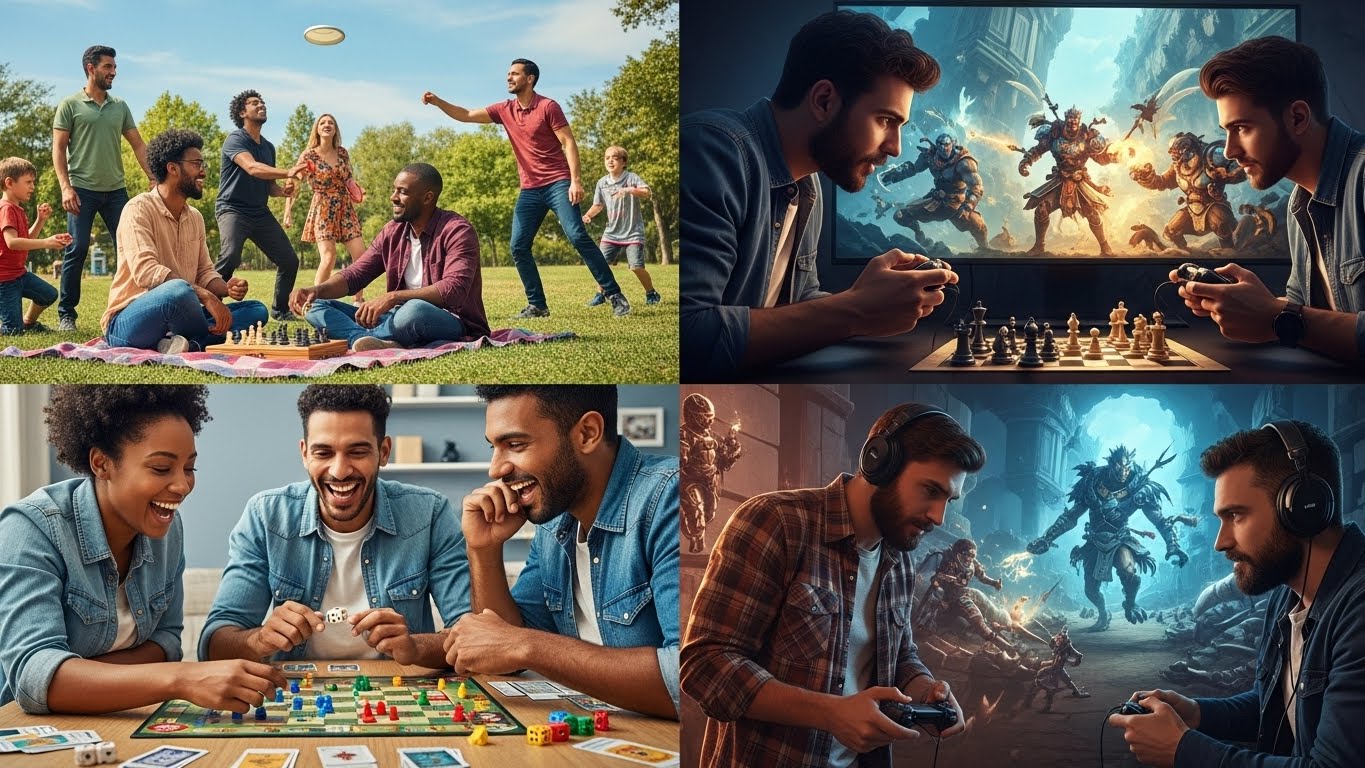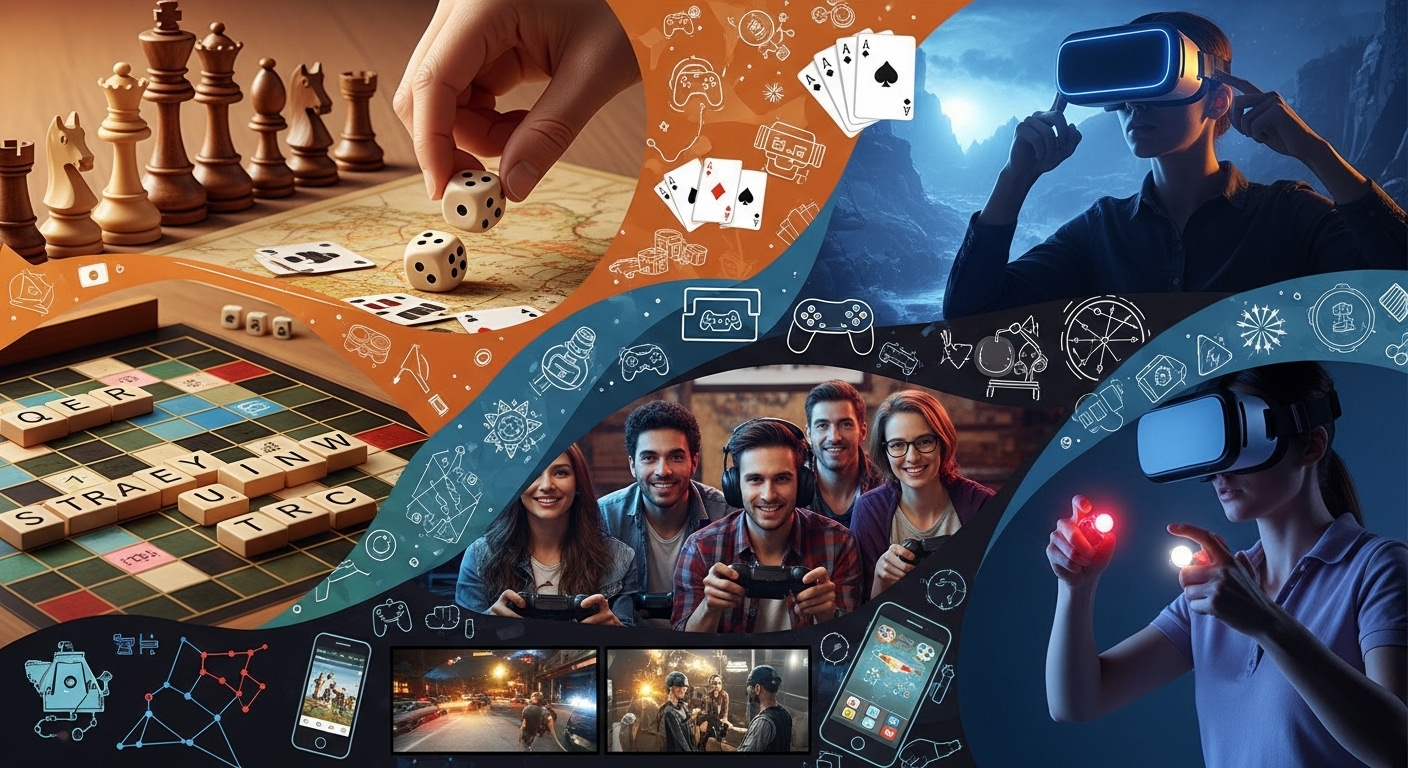

Games have been an essential part of human culture for centuries, offering enjoyment, education, social connection, and even a sense of competition. From ancient board games to modern video games, the world of gaming has evolved tremendously, impacting individuals of all ages and backgrounds. What began as simple forms of entertainment has transformed into an expansive, multi-billion-dollar industry with a diverse range of experiences. In this blog post, we’ll explore the history of games, the various types that exist today, and how they continue to shape the way we interact with each other and the world around us.
The Origins of Gaming: From Ancient Times to Traditional Games
The roots of gaming can be traced back to ancient civilizations. Games were not only forms of entertainment but also served as tools for social bonding, strategic thinking, and education. One of the earliest known games is the Royal Game of Ur, which dates back to around 2600 BC in Mesopotamia. It was a board game that involved dice and had a strategy component, much like the modern-day game of backgammon. Games like these were often played in social settings, and their role in ancient cultures was both recreational and ceremonial.
In ancient Egypt, games like Senet were used in religious rituals, symbolizing the journey through the afterlife. Similarly, games in Greece and Rome, such as Petteia and Latrunculi, were not just about fun, but also about showcasing skill, strategy, and, in some cases, even status. Chess, which originated in India as Chaturanga during the Gupta Empire, further exemplifies how games became symbols of intellect and wisdom over time. The game evolved in Europe, becoming the version we know today, and is still considered one of the greatest tests of strategy and intellect.
The Growth of Board Games: Bringing People Together
Board games have remained a staple of gaming culture throughout history, even as new forms of entertainment have emerged. In the 20th century, the boom of commercially produced board games further expanded the gaming landscape. Games like Monopoly, Scrabble, Clue, and Risk became household names, providing family entertainment and promoting social interaction. These games emphasized strategic thinking, problem-solving, and the importance of luck — fundamental elements that continue to appear in many of today’s games.
The success of these games helped establish a subculture around board gaming that continues to thrive today. With the rise of tabletop gaming communities, conventions, and the explosion of modern board games like Settlers of Catan and Ticket to Ride, board gaming has seen a resurgence in recent years. Today, board games are often seen as a form of social gathering, allowing people to spend time together while engaging in friendly competition or teamwork.
The Video Game Revolution: Changing the Entertainment Landscape
While traditional board games continue to enjoy popularity, the most significant transformation in the world of games came with the advent of video gaming in the mid-20th century. The launch of early arcade games like Pong in 1972 marked the beginning of the video game revolution. Initially, video games were seen as a novelty, mostly confined to arcades, but they quickly became a cultural phenomenon.
The 1980s and 1990s witnessed the rise of home consoles, with systems like the Atari 2600, Nintendo Entertainment System (NES), and Sega Genesis bringing gaming into people’s living rooms. Iconic games such as Super Mario Bros., Pac-Man, and Street Fighter captured the imaginations of millions, paving the way for video games to become an integral part of popular culture. With the development of 3D graphics, improved processing power, and larger game worlds, video games soon began to rival traditional forms of entertainment, such as movies and television.
Today, the video game industry is one of the most lucrative entertainment sectors in the world, surpassing even the film industry in terms of revenue. The emergence of multiplayer online games, such as World of Warcraft, Fortnite, and League of Legends, further expanded the scope of gaming. These games brought players together from around the globe, allowing them to interact, compete, and collaborate in virtual worlds.
Types of Games: A World of Infinite Possibilities
The world of games is incredibly diverse, catering to a wide variety of tastes, interests, and skill levels. Whether you’re into strategy, action, storytelling, or exploration, there’s something for everyone. Here are some of the major categories of games that have captivated players for generations:
1. Action and Adventure Games
Action games are often fast-paced and focus on physical challenges. These games typically emphasize reflexes, combat, and hand-eye coordination. Classic examples include Super Mario Bros. and Street Fighter, where players must navigate levels or fight enemies to progress. As technology advanced, action games grew more sophisticated, incorporating rich storylines and open-world gameplay.
Adventure games, on the other hand, prioritize exploration, puzzle-solving, and narrative. Games like The Legend of Zelda, Tomb Raider, and Uncharted blend action with storytelling, allowing players to immerse themselves in complex worlds filled with quests, secrets, and characters.
2. Role-Playing Games (RPGs)
Role-playing games (RPGs) offer players the opportunity to step into the shoes of characters in a fictional universe. In RPGs, players often assume the role of a protagonist and make choices that shape the course of the story. These games are known for their deep narratives, character development, and immersive worlds.
Classic RPGs like Final Fantasy, The Elder Scrolls, and Chrono Trigger have become cultural touchstones. Today’s RPGs, including open-world games like The Witcher 3 and Cyberpunk 2077, continue to push the boundaries of storytelling and gameplay. Many RPGs also feature multiplayer elements, allowing players to team up and tackle challenges together in games like World of Warcraft and Diablo.
3. Simulation and Strategy Games
Simulation games give players the chance to manage or simulate real-life situations. Whether it’s building cities in SimCity, managing a farm in Stardew Valley, or running a zoo in Planet Coaster, these games offer a more relaxed and creative experience.
Strategy games require players to plan, manage resources, and make tactical decisions to achieve goals. From the early days of games like Risk and Civilization to modern titles like StarCraft, Age of Empires, and Total War, strategy games have long appealed to players who enjoy critical thinking and problem-solving.
4. Sports and Racing Games
Sports games allow players to experience the thrill of competition in virtual versions of real-world sports. From FIFA and Madden NFL to NBA 2K and Gran Turismo, sports games replicate the excitement of football, soccer, basketball, and more. Racing games like Mario Kart and Need for Speed give players a chance to speed through tracks, competing against friends or AI-controlled opponents.
5. Casual and Mobile Games
Casual games are designed for quick, easy play, often with simple mechanics and minimal time commitment. These games are incredibly popular on mobile platforms, with titles like Candy Crush and Angry Birds attracting millions of players. Casual games are accessible to a broad audience, including those who may not typically engage in traditional gaming.
Mobile games, in general, have revolutionized gaming by making it possible for people to play anywhere, anytime. With the proliferation of smartphones and app stores, gaming has become more accessible than ever, allowing players to enjoy games on the go.
The Social Aspect of Gaming: Connecting People Around the World
Gaming has always had a social component, but the rise of online multiplayer games has taken this aspect to new heights. Whether it’s teaming up with friends to tackle a raid in World of Warcraft or competing against players from around the globe in Fortnite, games today are often as much about social interaction as they are about gameplay.
Many games feature online communities where players can communicate, collaborate, and even form friendships. The social aspects of gaming have led to the growth of eSports, a rapidly expanding industry where professional players compete in tournaments for cash prizes. Competitive gaming has gained massive popularity, with games like Dota 2, League of Legends, and Counter-Strike: Global Offensive attracting millions of viewers worldwide.
Furthermore, gaming has become a form of content creation, with platforms like Twitch and YouTube enabling players to stream their gameplay to a global audience. This has given rise to a new wave of content creators, including gamers, commentators, and influencers, who engage with their audiences through live streams, tutorials, and Let’s Play videos.
The Future of Gaming: What Lies Ahead?
As gaming technology continues to evolve, the future of gaming holds exciting possibilities. Virtual reality (VR) and augmented reality (AR) are already starting to change the way players interact with digital worlds, and the integration of artificial intelligence (AI) promises to create even more immersive and dynamic gaming experiences. With the continued growth of cloud gaming, players will be able to access high-quality games without needing expensive hardware, making gaming more accessible to a broader audience.
Moreover, as new gaming platforms and experiences emerge, we are likely to see even more hybrid genres and cross-media storytelling, blurring the lines between games, films, and television. With constant innovation, the world of games will continue to push boundaries and bring people together in new and exciting ways.