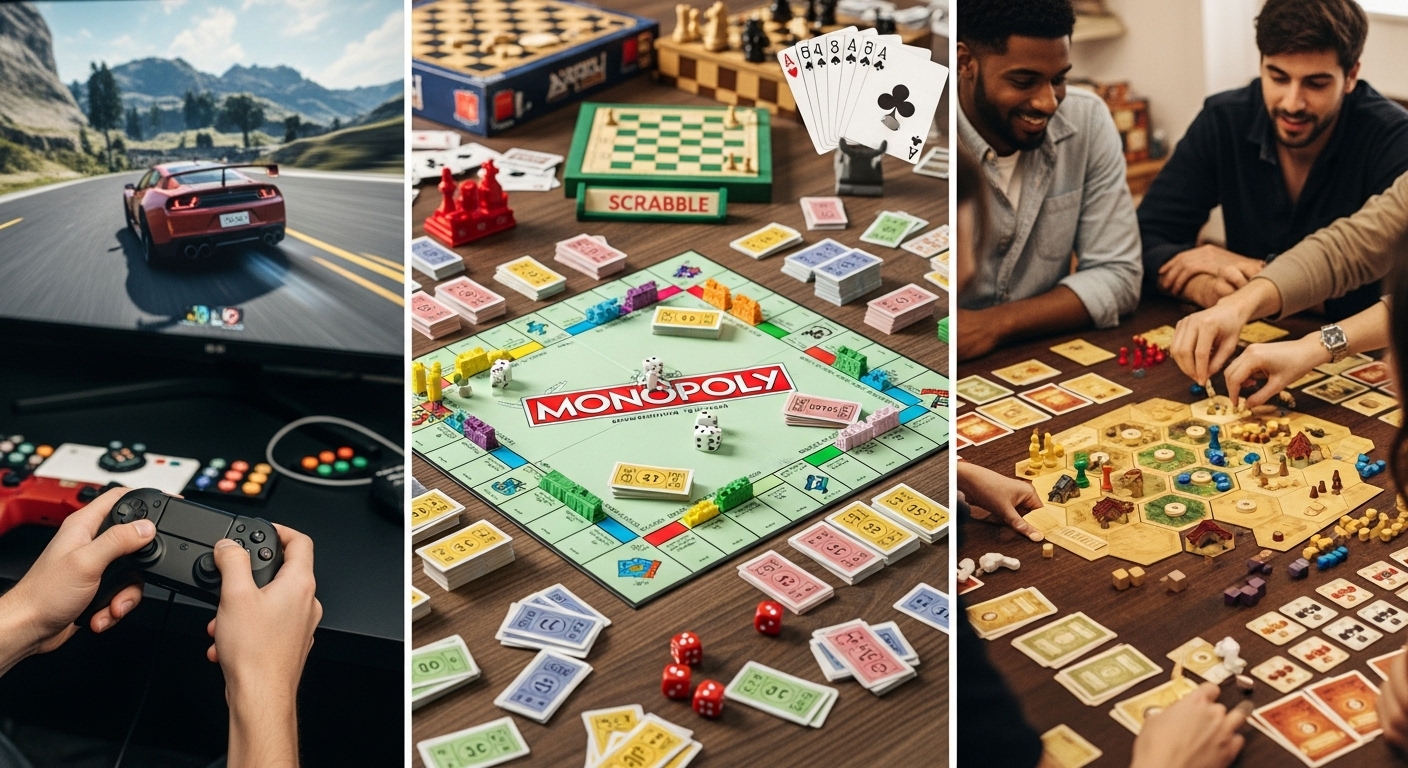
Games have always been an essential part of human culture. From ancient civilizations to the modern digital age, people have played games for entertainment, education, social bonding, and even survival training. The concept of games has evolved over thousands of years—from simple board games carved into stone to complex virtual worlds powered by advanced technology. In today’s world, the word “game” carries an enormous meaning, covering everything from physical sports and tabletop activities to online multiplayer platforms and immersive simulations. This blog explores the vast universe of games—their history, importance, impact, and the fascinating ways they continue to shape human life.
The Ancient Origins of Games
Long before the rise of modern technology, ancient people played games using stones, sticks, and other natural materials. Archaeological evidence shows that games existed even before written history. For example, dice-like objects found in ancient Mesopotamia suggest that early humans enjoyed games of chance. Ancient Egypt had Senet, one of the oldest known board games, which represented a journey to the afterlife. In China, Go was invented over 2,500 years ago, focusing on strategy and mental skill. These early games were not merely for fun—they often had cultural, religious, or educational significance.
In many societies, games reflected life itself. They taught lessons about strategy, patience, teamwork, and fate. They were also used in rituals and ceremonies, symbolizing the balance between luck and skill, or the struggle between good and evil. What is fascinating is that even though cultures around the world developed independently, almost every civilization created its own form of play. It proves that gaming is a universal human instinct.
The Evolution of Board and Tabletop Games
As human society became more organized, so did its games. Board and tabletop games evolved to include more structured rules and creative designs. Chess, which originated in India as Chaturanga, spread to Persia and later to Europe, becoming one of the most intellectual games ever created. It represented strategy, foresight, and mental strength. Similarly, games like Checkers, Backgammon, and Dominoes became popular among different cultures.
In the 19th and 20th centuries, the rise of industrial manufacturing made it easier to produce board games on a large scale. Families could now purchase boxed games that were easy to learn and play at home. Monopoly, Scrabble, and Clue became household names, combining luck and logic in entertaining ways. These games encouraged creativity, social interaction, and healthy competition. They were also educational, helping children develop vocabulary, counting skills, and problem-solving abilities.
Even today, board games maintain their charm. Despite the dominance of digital entertainment, tabletop gaming has experienced a modern revival. Enthusiasts around the world gather to play strategy-heavy games like Catan or cooperative adventures like Pandemic. This resurgence proves that face-to-face gaming still holds a powerful emotional connection in a world increasingly dominated by screens.
The Birth of Video Games
The mid-20th century marked the dawn of a new gaming era—the digital age. In the 1950s and 1960s, scientists and engineers began experimenting with computer technology to create simple electronic games. One of the earliest examples was “Tennis for Two,” a primitive tennis simulation displayed on an oscilloscope. Soon after, “Spacewar!” emerged in the 1960s, allowing players to control spaceships in a digital battle.
The 1970s introduced video games to the public with the release of arcade machines. Games like Pong, Pac-Man, and Space Invaders became global sensations. These coin-operated machines attracted players of all ages, creating a new form of public entertainment. The simplicity of these games made them easy to understand yet difficult to master, leading to hours of fun and competition.
Home consoles soon followed. The Atari 2600 revolutionized gaming by bringing it into living rooms. Players could now enjoy their favorite arcade experiences without leaving home. The industry continued to grow, leading to the emergence of legendary companies like Nintendo, Sega, and later Sony and Microsoft. Each brought innovation, creativity, and storytelling to the world of games.
The Golden Age of Console and PC Gaming
The late 1980s and 1990s are often called the “golden age” of video games. During this period, iconic franchises such as Super Mario, The Legend of Zelda, Sonic the Hedgehog, and Final Fantasy captured the hearts of millions. These games introduced memorable characters, detailed worlds, and emotional storytelling. They weren’t just digital amusements—they became cultural icons.
The same period also saw the rise of personal computer gaming. Titles like Doom, StarCraft, and The Sims demonstrated the flexibility and power of PC platforms. Players could now experience complex strategies, immersive role-playing, and realistic simulations. Game developers experimented with graphics, sound, and interactive storytelling, turning gaming into an art form.
Technological improvements such as 3D graphics and CD-ROM storage transformed the gaming experience. Suddenly, games could feature voice acting, cinematic cutscenes, and open worlds that gave players freedom to explore. The line between games and movies began to blur.
The Rise of Online and Multiplayer Gaming
The internet changed everything. Once computers and consoles became connected to the web, gaming evolved from a solitary activity into a global social phenomenon. Multiplayer games allowed players to challenge opponents across the world. Titles like Counter-Strike, World of Warcraft, and Call of Duty redefined the concept of community.
Online gaming introduced new genres and experiences. Players could form teams, communicate in real-time, and compete in massive virtual arenas. E-sports emerged, turning gaming into a professional career. Today, competitive gaming tournaments attract millions of viewers and offer multi-million-dollar prizes. This transformation shows how far gaming has come—from a pastime to a legitimate sport and entertainment industry.
Mobile Gaming and the New Casual Audience
The arrival of smartphones brought gaming into everyone’s hands. Mobile games broke the barrier between “gamers” and “non-gamers,” reaching people of all ages and backgrounds. Simple yet addictive games like Angry Birds, Candy Crush, and Temple Run became cultural phenomena. They were easy to learn, required no expensive equipment, and could be played anywhere.
Mobile gaming also encouraged creativity and diversity in design. Developers experimented with puzzles, simulations, strategy, and storytelling. Indie game developers, often working alone or in small teams, began producing some of the most original and emotional games on mobile platforms. This democratization of game creation allowed anyone with a good idea to reach a massive audience.
The World of E-Sports and Streaming
Today, gaming is not only something people play—it’s something they watch. Streaming platforms have turned gamers into celebrities, and competitive gaming has become a global industry. Professional players train for hours, develop strategies, and compete in tournaments broadcast to millions. Games like League of Legends, Dota 2, and Fortnite have fan bases that rival traditional sports.
Streaming has also made gaming more interactive. Viewers can watch live gameplay, chat with streamers, and become part of a community. This new form of entertainment has blurred the line between players and audiences. It’s not just about winning—it’s about performance, personality, and connection.
Educational and Therapeutic Uses of Games
Beyond entertainment, games have proven valuable in education and therapy. Educational games help children learn subjects like math, science, and languages in engaging ways. They promote active learning and critical thinking. Serious games are used to train professionals in medicine, aviation, and the military. These simulations provide safe environments to practice real-world scenarios.
Therapeutic gaming is another growing field. Games are used to treat anxiety, depression, and post-traumatic stress disorder by providing controlled environments that promote relaxation and focus. Virtual reality games help stroke patients regain motor skills through interactive rehabilitation. The ability of games to combine fun with purpose is one of their greatest strengths.
The Psychology of Gaming
Why do people love games so much? Psychologically, games satisfy many human needs. They provide challenges that require skill, strategy, and persistence. They reward players with feelings of accomplishment, progress, and mastery. Games also offer escapism—an opportunity to step into another world, become a hero, or experience stories beyond reality.
Socially, games connect people. Cooperative gameplay fosters teamwork, communication, and trust. Competitive games stimulate ambition and perseverance. Even single-player experiences can create emotional bonds between players and characters. In essence, games offer a safe space for people to express creativity, emotion, and curiosity.
The Artistic Side of Games
Many argue that games are a modern form of art—and rightly so. They combine visuals, music, storytelling, and interactivity to create powerful emotional experiences. Games like Journey, The Last of Us, and Shadow of the Colossus demonstrate that games can evoke feelings similar to movies or literature. The design of levels, characters, and soundtracks requires immense creativity and artistic skill.
Game developers today are recognized as artists who craft experiences rather than just programs. They build worlds that players can explore and shape. Every texture, dialogue, and piece of music adds to the immersive atmosphere. Gaming is no longer just about competition—it’s about emotional expression.
The Future of Gaming: Virtual Reality and Beyond
Technology continues to push the boundaries of gaming. Virtual reality (VR) and augmented reality (AR) have opened new possibilities. Players can now physically move, interact, and explore in digital spaces. VR headsets transport users into lifelike environments, whether they’re fighting dragons or exploring the depths of the ocean. AR, on the other hand, blends digital elements with the real world, as seen in games like Pokémon Go.
Artificial intelligence is also transforming game design. AI-driven characters can now learn and adapt, making gameplay more dynamic. Procedural generation allows for endless worlds, where no two playthroughs are the same. Cloud gaming enables players to stream high-quality games without expensive hardware, making gaming more accessible than ever.
The future might also see deeper integration of games with everyday life. Educational institutions may use game-based learning more frequently. Fitness and health apps already use gamification to motivate exercise and wellness. Even workplaces use games to train employees and encourage productivity.
The Social and Cultural Impact of Games
Games have become one of the most influential cultural forces in the world. They shape music, fashion, movies, and even language. Gaming memes, catchphrases, and icons are part of modern communication. Game soundtracks are performed in orchestras; characters appear in movies; and esports arenas fill with cheering fans.
However, the cultural power of games also brings responsibility. Issues such as online toxicity, addiction, and representation in games are widely discussed. Developers are now working toward creating more inclusive environments and diverse characters that reflect the real world. Games have the power to unite people, but they must also promote respect and understanding.
Games as a Reflection of Society
Games often mirror the societies that create them. They express collective fears, hopes, and values. Strategy games reflect political and economic ideas. Role-playing games explore identity and morality. Even casual games represent daily struggles and relaxation habits. By studying games, we can understand what people value, how they think, and how they imagine the future.
In a way, games are modern myths—interactive stories that carry meaning. They allow us to question choices, explore possibilities, and experience consequences in a safe environment. They encourage creativity, cooperation, and competition, all essential traits of human progress.
Conclusion: The Infinite Game of Life
Games are more than entertainment—they are expressions of human creativity, intelligence, and emotion. From ancient stones to digital worlds, from chessboards to virtual realities, games have evolved alongside humanity. They teach, heal, connect, and inspire. Every era redefines what games mean, yet their essence remains the same: play is at the heart of being human.
The world of games is infinite. It grows as technology advances and imagination expands. Whether you are a casual player solving puzzles on your phone, a professional e-sports competitor, or a storyteller designing new worlds, you are part of a grand tradition that stretches across centuries. Games remind us that life itself is a kind of play—a journey of learning, challenge, and discovery. And as long as humans exist, the game will go on.